
New Temple Complex
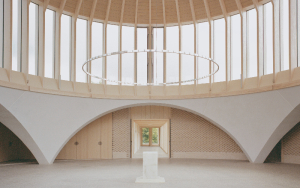
The 559m² New Temple Complex by James Gorst Architects demonstrates an exemplar approach to passive design and long-term sustainability.
Situated within an 11.5-hectare estate in the South Downs National Park, the New Temple Complex is a multi-faith space comprising of healing chapels, a library, a multi-use lecture room, a kitchen and a visitor’s entrance foyer; all linked via an internal cloister. The temple holds symbolic elements reflecting the spiritual beliefs of the White Eagle Lodge and it occupies the same sacred spot as its 1970s predecessor. The building is completely framed in timber with clay brickwork encased in chalk lime mortar, all natural materials found in the immediate surroundings, encouraging a connection with the landscape.
The building’s environmental strategy is rooted in passive design principles, prioritising energy efficiency during the initial design phase. This approach includes low fabric heat loss, enhanced daylighting, and natural ventilation, forming the basis for the subsequent integration of low-carbon and renewable technologies.
The building fabric incorporates high-performance glazing exceeding conventional insulation standards, thereby effectively minimising heat loss. The New Temple's shallow, single-storey structure maximises daylight, reducing the need for artificial lighting. Nestled away from noise and pollution, the temple enjoys the benefits of natural ventilation, further aided by high-level actuators strategically placed in the temple's clerestory.
Innovative sustainability features include a sub-floor ventilation system operational in high occupancy areas. This system uses the thermal mass of a labyrinth to provide tempered air in winter and free cooling in summer.
Overcoming challenges posed by the absence of natural gas infrastructure and the availability of only single-phase power, the project successfully procured a small low-carbon ground source heat pump meeting the needs of the entire building. Buried in the landscape, this technology extracts low-temperature energy from the ground, producing higher temperatures that serve underfloor heating throughout the temple. Pre-existing photovoltaic panels were repurposed and relocated to an open area on-site, partially powering the heat pump and providing the building with low-carbon electricity.
The New Temple Complex stands as a timeless space for contemplation and community, seamlessly blending spirituality, simple architecture, and sustainable design. Its harmonious integration with the surroundings embodies both peace and environmental stewardship.
In Numbers
On-site energy generation 4,550 kWh/yr
Heating and hot water load 19.73 kWh/m2/yr
Total energy load 42.60 kWh/m2/yr
Carbon emissions (all) 25.9 kgCO2/m2
Services
Electrical and Lighting
Heating
Ventilation
Acoustics
Awards
2024 RIBA National Award Winner
2024 RIBA South Award Winner
2024 RIBA South Awards – Building of the Year Winner
2024 RIBA South Awards – Sustainability Award Winner
2024 RIBA South Awards – Project Architect of the Year Winner
2024 Civic Trust Awards – The National Panel Special Award Winner
2024 Civic Trust Awards – The Special Award for Sustainability
2023 AJ Architecture Awards Winner
2023 Wood Awards Winner
Download press coverage from right-hand column.
Jacksons Lane Arts Centre
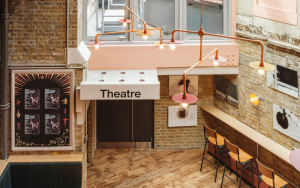
Founded in 1975 inside a former Wesleyan Methodist church, Grade II-listed Jacksons Lane Arts Centre has played a key role in the development of London’s fringe and community theatre. The latest project upgrades technical and visitor facilities within the complex, which features a 166-capacity theatre, large-scale studio and café-bar, all of which were in need of repair.
National Theatre Costume Workshops
Refurbished, purpose-built facilities for a sustainable theatre production.
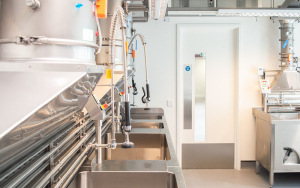
Enhancements to the wig, hair and make-up studios, dye rooms, prop workshops and laundry rooms, including replacement of gas fired tumble dryers and dye vats with electric alternatives and improving heating, cooling, lighting and controls to support the Theatre’s goal of achieving net-zero carbon by 2030.
Respecting the Theatre’s Grade II* listing, Skelly and Couch provided facilities tailored to the unique nature of the work. Liaising with the local authority was vital to preserving the building's heritage, while working with dye vat and fume extract specialists ensured the facilities met specific operational needs.
Boasting over 80 square meters of glazing, the existing structure utilises a large light well to naturally illuminate the spaces. Thermal modelling was imperative to ensured this expansive façade was not overheating the studios. Furthermore, building fabric and insulation options were explored to reduce heat loss during the winter months.
The theatre has made strides in reducing its energy consumption through the installation of heat recovery in the ventilation system and upgrades to heating and lighting controls, which have allowed staff to better moderate the internal environment. Additionally, the existing heating system was replaced with an electric alternative, future-proofed for compatibility with a heat pump to support the NT's ongoing progress.
Skelly and Couch used precise phasing and conducted noise testing of existing areas to limit disruption and allow performances to continue, where applicable, attenuators and spring mounted fans were fitted.
To minimise the presence of dust and fumes in the workshops, different vent and ventilation strategies were assessed through BIM modelling, and existing specialist extract equipment was evaluated including an analysis of air movement at user face height and measurements of air velocity. These practices, accompanied by the installation of emergency safety features helped promote employee welfare.
Following this project, Skelly and Couch have continued to work closely with the National Theatre, developing crew facilities and the new NT Green Stores, refurbishing the Dorfman theatre, and undertaking extensive reroofing and rewiring works.
Warburg Institute
Refurbishment and extension of one of the world’s leading scholarly institutions.
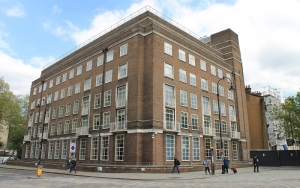
Phased refurbishment of the world-leading center in a conservation area, focusing on preservation through environmental control. It includes the historic libraries, a new archive and gallery, an extension with a lecture theatre and reading room; and supports future district heating decarbonisation.
The Warburg Institute, at the University of London’s Bloomsbury campus, is a renowned humanities research institute and library. Housed in a 1950s four-story building with a lower ground floor, it holds a globally significant collection. Its open-stack library of over 360,000 volumes is the largest dedicated to the afterlife of antiquity and cultural transmission, with key materials secured in the archive.
Renovation began with library stacks and academic offices on the upper floors, followed by the first and second floors. The final phase transformed the ground and lower ground levels, adding a reception, gallery, special collections archive, photographic room, and a courtyard extension with a floating lecture theatre and archive reading room. Two AV-equipped classrooms replaced the former lecture theatre and connect to the new one, accommodating larger audiences. Plant facilities were upgraded throughout.
Passive strategies included double-height lightwells to bring daylight into the special collections reading room, reoriented library stacks to reduce sun exposure, and new secondary glazing to limit heat loss, improve thermal performance, and protect materials with integrated UV film.
Skelly & Couch worked with the existing district heating system to serve renovated areas and upgraded it to support future decarbonisation. Fragile ceilings required careful coordination with the structural engineer to ensure safe MEP installation. New heating with improved controls serves the building, while humidifiers in the libraries maintain moisture during heating periods. MVHR ventilates the gallery, lecture theatre, and reading room; toilets use extract-only systems. In the lecture theatre, an air source heat pump provides cooling during busy periods. Energy-efficient LED lighting with occupancy sensors and daylight dimming, along with low-flow water fittings, was installed throughout.
Archive materials were relocated to a windowless, insulated lower-ground room , designed to meet stringent storage standards. Thermally coupled to the ground, it is passively climate-controlled, with a dehumidifier to manage external moisture.
The renovation secures the Warburg Institute’s legacy of discovery and learning, creating welcoming, functional spaces for visitors and staff while safeguarding invaluable materials. The project achieved an SKA ‘Gold’ rating.
FT: Warburg Institute renovation to bring enigmatic establishment into 21st century
Awards
2025 - AJ Architecture Awards, Refurbishment (£10m and Over) and Higher Education categories, shortlisted.
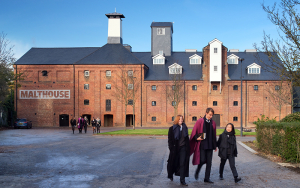
King's School Canterbury – Malthouse
A modern performance centre developed within a historic maltings.
A former maltings now hosts drama and dance studios, a 350-seat theatre encouraging pupil involvement both on and off stage. Foyers, carved out from historic barley kilns, connect to a commercial kitchen, dining rooms, science labs, and art studios. Additional spaces include drama department offices, actor changing rooms, and set production workshops.
The King’s School Canterbury is Britain’s oldest public school, a co-educational day and boarding school. Our long-standing professional relationship with the school has resulted in bespoke standard project specifications, simplifying maintenance, and establishing common design standards for future endeavours.
The sensitive repurposing of the 19th century Malt into a new performance centre involved threading services around existing building features, requiring close collaboration with the whole design team, whilst meeting the client’s brief for facilities akin to those found in professional theatre environments.
Significant upgrades to the fabric and insulation resulted in a largely-reused existing building with great sustainability credentials. Secondary glazing was added to improve efficiency whilst retaining the historic windows and a careful analysis determined which parts of the building could be comfortably naturally ventilated, despite it being immediately beside both the train line into London and residential properties.
Where natural ventilation was not appropriate, heat recovery systems were designed to ensure efficient use of energy in operation. Full M&E services were designed to ensure energy-efficient operation and lower carbon emissions.
Winning a RIBA National and four East Awards in 2021, the Malthouse at King’s School Canterbury was praised as an "exemplar of how to repurpose an existing building in an imaginative, honest, and sensitive way." This recognition highlights the successful transformation of the maltings, now a centre for creating and experiencing drama and dance of the highest quality.
Awards
Winner of a RIBA National Award 2021.
Winner of three RIBA South East Awards 2021: main award, Building of the Year and Conservation - Full Article.
Civic Trust Awards 2023.
Winner of an AJ Retrofit Award 2021: Cultural Buildings £5 million and over. The conversion of the Victorian brewery maltings into a school theatre and drama centre was described by judges as combining ‘a freshness of approach while sensitively retaining the character of the existing building’.
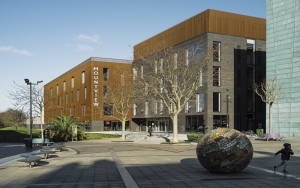
Mountview Academy of Theatre Arts
Skelly & Couch worked on a spectacular new home for the Mountview Academy of Theatre Arts on a site behind the Stirling Prize-winning Peckham Library in south London.
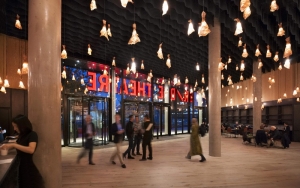
Bridge Theatre
The Bridge Theatre is London's first new commercial theatre of scale for four decades. The 900-seat auditorium is the flagship home of the London Theatre Company, with Nicholas Hytner and Nick Starr, who led 12 years of artistic and commercial success at the National Theatre, at its helm.
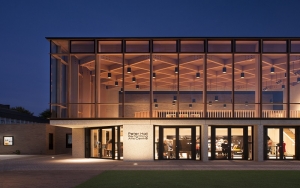
Perse School - Peter Hall Performing Arts Centre
A highly sustainable, professional‑grade performance A highly sustainable, professional‑grade performance and creative hub.
An EPC ‘A' rated cultural hub with a 400-seat auditorium, rehearsal, teaching, and support spaces. Key features include ground source heat pumps, a hybrid ventilation system, and a 13 KW PV array. Winner of the 2019 RIBA National and RIBA East Awards.
Set within the historic grounds of The Perse School in Cambridge, the new Peter Hall Performing Arts Centre (PAC) honours its namesake through artistic and environmental excellence. Conceived as a social heart for the campus, its triple-height galleried foyer serves as a café by day and a gathering space by night. The building includes a flexible 400-seat auditorium, daylight-filled studios, and full back-of-house facilities. Skelly & Couch delivered the full MEP design for the professional-grade theatre, ensuring exceptional comfort, energy efficiency, and performance. The project achieved an EPC ‘A' rating and won RIBA National and East awards.
A glazed façade brings abundant natural light into the foyer and interior spaces, establishing a visual connection with the courtyard ahead, while the auditorium also maintains a strong link to the outdoors through daylighting and views to the greenery behind.
Comfort and efficiency are further enhanced by a ground source heat pump that supplies efficient, year-round heating and cooling. Optimal air quality is maintained through automated windows and a mechanical ventilation system, partly powered by a 13kW rooftop PV array, cutting emissions and reducing reliance on the grid.
For over 80% of the year, the auditorium relies on silent, natural ventilation via under-seat plenums. Warm air rises and is exhausted through two large, attenuated chimneys, preserving acoustic isolation. Mechanical ventilation activates only during full-capacity performances. This sophisticated sustainable design merges aesthetic appeal with practical performance to create an environment that is both comfortable and conducive to the arts.
At the heart of the school community, the Peter Hall PAC breathes life into theatre through its strategic embrace of sustainability—nurturing a space where future voices rise, explore, and shine.
Awards
2019 RIBA National Award Winner
2019 RIBA National Award Winner
2019 RIBA East Award Winner
2020 Cambridge Design & Construction Best New Building Award (over £2m) Commendation
2020 Cambridge Design & Contruction Craftsmanship Award Winner
2020 Chicago Athenaeum International Architecture Award Winner
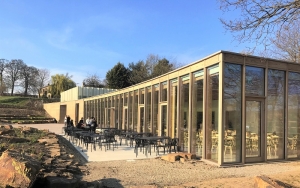
The Weston, Yorkshire Sculpture Park
Sustainable centre within a historic landscape
A new centre with a unique, low-tech environmentally controlled and daylit gallery; restaurant, commercial kitchen and retail space. Heated by an air source heat pump and wastewater dealt with on site including a biodiverse swale system. Shortlisted for the Stirling Prize 2019.
Founded in 1977, the park is set in a former quarry on the estate of the 18th-century Bretton Hall. It was the first of its kind in the UK and remains the largest in Europe. The open-air gallery features works by renowned artists such as Henry Moore and Barbara Hepworth.
To enhance visitor experience and address reductions in public funding, a new visitor center was completed in 2019. Designed by Feilden Fowles, the 2016 Young Architect of the Year, the centre harmonises with the historic landscape while providing space for temporary exhibitions of 20th- and 21st-century artworks.
Skelly & Couch carried out full services design at the high-profile cultural destination, where the building’s internal climate is optimised for natural control as much as possible. Confronted with a site having no gas or drainage connections, a limited electrical supply and restricted services routes and zones around the building, some inventive engineering solutions were required.
Natural ventilation, solar control glazing and a green roof prevent overheating, ensuring a comfortable indoor environment. Inside the gallery, 10,000 unfired clay bricks form an innovative low-energy environmental control system that maintains optimal internal conditions and significantly reduces the reliance on air conditioning.
Complementing this, a sophisticated control system and humidity buffer—incorporating hygroscopic materials—work alongside a standard thermal wheel heat recovery unit to regulate temperature and humidity. A highly efficient scheme was developed using an electric heat pump to deliver both heating and domestic hot water to basins, eliminating the need for conventional hot water flow and return systems and thereby reducing energy consumption by over 50%. Additionally, underfloor heating provides a consistent sense of warmth throughout the space, even during periods of high visitor traffic and cold weather outside.
Designed with sustainability at its core, The Weston preserves the integrity of its setting while enhancing visitor comfort, engagement, and the Park’s cultural offering.
Awards
2019 – RIBA Stirling Prize Finalist
2019 – RIBA National Award
2019 – RIBA Yorkshire Award Winner
2019 – RIBA Yorkshire Building of the Year
2019 – RIBA Yorkshire Client of the Year
2021 – Civic Trust Award Winner
2021 – Civic Trust Awards Regional Finalist (Yorkshire & Humberside).
2022 – EU Mies van der Rohe Award Nomination. It was one of 18 projects longlisted in the UK, among 449 works in 41 countries featured.
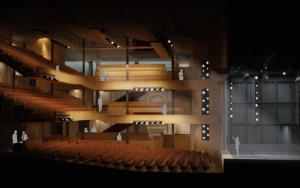
Hall for Cornwall
The project involved the full refurbishment of all public parts of the BREEAM ‘Very Good’-rated Hall for Cornwall and the creation of a new multi-layered auditorium, which reveals the stunning historic fabric of the building to maintain its core cultural purpose to entertain.