
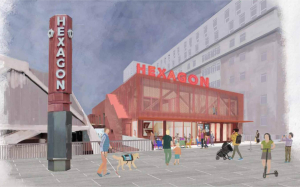
Hexagon Studio Theatre
Transformation of a 1970s icon into a low-carbon cultural landmark.
A new 300-seat theatre extension with rehearsal spaces, offices, a workshop, gallery, café, foyer, and back-of-house areas. The project resolves complex technical and spatial challenges while supporting the decarbonisation of the existing theatre through low-carbon systems, including an open-loop ground source heat pump. It targets BREEAM Excellent.
The Hexagon Theatre, designed by Robert Matthew, Johnson-Marshall & Partners, is a distinctive six-sided building and a striking example of 1970s architecture in central Reading. Celebrated at its opening for its radical form, the hexagonal geometry defines both the building’s exterior and the auditorium within.
The theatre is currently undergoing a major redevelopment, supported by Levelling Up funding awarded to Reading Borough Council. The project aims to decarbonise the existing building while enhancing its cultural capacity through a new studio extension designed by Haworth Tompkins. The new facilities will be located on the building’s right-hand side and will include a 300-seat auditorium, rehearsal spaces, and a foyer. Skelly & Couch are leading on environmental services across both aspects of the project, helping to drive the Council’s commitment to achieving net zero carbon by 2030 and securing a BREEAM Excellent rating.
In the extension, a fabric-first approach maximises airtightness, while daylight is introduced through rooflights, internal windows, and glazing to the auditorium and foyer. Solar control is managed through brise soleil, canopies, and blinds to prevent overheating. The auditorium features a hybrid ventilation system that combines natural airflow with a sound-attenuated exhaust chimney, preserving acoustic integrity while regulating temperature. A punkah fan enhances clearance of performance smoke effects. In the foyer, CO₂-controlled insulated louvres and doors enable secure night-time ventilation through passive air circulation.
In high-occupancy areas, air is supplied using mechanical ventilation with heat recovery. Efficient heating and cooling are provided by two four-pipe air source heat pumps, serving radiators, fan coil units, underfloor heating, and an AHU coil in the auditorium.
Existing water systems are upgraded, and electrical capacity increased with the installation of a new switchboard and sub-mains and substation upgrade. Lighting enhancements include track spotlights, LED fittings, and ETC Arc System Pro units, providing professional-grade dimming control. Safety systems have been modernised with an upgraded fire alarm and a PAVA system to support improved emergency response and accessibility. A new LED non-maintained addressable emergency lighting system has been installed to align with the Theatres preferred maintenance regime.
As part of the Theatre’s decarbonisation strategy, Skelly & Couch collaborated with the Council to devise and implement low-carbon, energy-efficient solutions—from early feasibility to detailed design. A key element of the sustainability strategy is the integration of an open-loop ground source heat pump system. Following feasibility studies and successful borehole testing, detailed design is now progressing alongside a range of complementary upgrades. These include an enhanced Building Management System, improved heat recovery within the main auditorium’s air handling units (AHUs), and the replacement of heat emitters—all designed to improve thermal efficiency and reduce carbon emissions. A CIBSE TM54 assessment has validated the projected performance, confirming significant reductions in operational energy use.
The Hexagon is set to become a flexible, low-carbon cultural hub, strengthening community ties and supporting long-term sustainability in the heart of Reading.
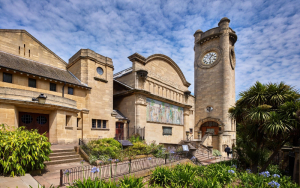
Horniman Museum Nature + Love
Pioneering regeneration highlighting the climate emergency
Redevelopment of the estate to update the Grade II* listed Natural History Gallery, create the Nature Explorers' Adventure Zone—a nature-themed play area and children's café with improved access to the historic Nature Trail—and form a Sustainable Gardening Zone with a plant nursery and planting displays.
Located in South London, The Grade II*-listed Horniman Museum and Gardens includes a main building, designed by Charles Harrison Townsend, which opened in 1901, with an extension completed a decade later. In 2002, Allies and Morrison expanded the complex, and in 2012, Walters & Cohen, in Collaboration with Skelly & Couch, completed a £2.3 million garden pavilion. Skelly & Couch is now part of the competition-winning team led by Feilden Fowles for The Nature + Love project.
The Nature + Love project aims to revitalise the Arts and Crafts-style building and its surrounding gardens, supporting the museum's commitment to addressing climate change, minimising waste, using water responsibly, enhancing well-being, and promoting responsible procurement—all as part of their ambition to achieve greenhouse gas neutrality by 2040. The project focuses on three key areas:
Natural History Gallery: A phased refurbishment keeps the building in use whilst the Grade II listed roof is upgraded to achieve optimum thermal insulation and best practice-ventilation. The works protect against moisture buildup and future proof the structure for the installation of PV panels.
Services are fully replaced and concelead within the existing fabric. This includes mechanical ventilation with heat recovery, a heating system designed for future integration of heat pumps, integrated controls and lighting, and a new fire alarm system. The strategy also adopts a low-energy approach to ensure a climatically stable environment for the long-term conservation of the exhibits.
Nature Explorers' Adventure Zone: The boating pond area is being revitalised to attract more visitors by creating a children's play and education area, a kindercafé with scenic views, and improved access to the nature trail.
Sustainable Gardening Zone: Propagation facilities are being redeveloped with sustainable biomass heating and rainwater harvesting, two enhanced glasshouses, new community facilities, and landscaping improvements to the South Downs area of the site.
These improvements will promote learning and wellbeing, positioning the Nature + Love project as a catalyst for positive change by inspiring visitors to care for the planet and their communities.
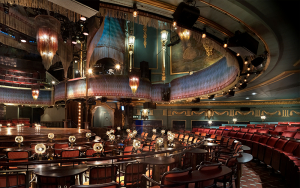
Playhouse Theatre, London - Kit Kat Club
An Exceptional Theatre Transformation for Multi-award-winning Production.
London’s Grade II-listed Playhouse Theatre was reconfigured from a proscenium-arch auditorium into a spectacular in-the-round venue, with additional rooms in the upper circle level. Completed in record time for the multi-award-winning Cabaret, it recreated the Kit Kat Club's intimate atmosphere, transporting audiences to 1930s Berlin.
The project involved securing listed building consent, obtaining planning approval, and reconfiguring the entire auditorium—all within 9 months. Navigating the existing services and live safety systems within the limited timeframe was challenging. Engineering judgement was crucial for discerning and prioritising key requirements, addressing critical issues, and ensuring successful project completion while meeting regulatory compliance.
Listed original ductwork, a rare feature, required detailed surveying to effectively reuse it. All other services were adapted or renewed and located in the basement.
In a theatre-in-the-round, the audience surrounds the stage, creating an immersive and dynamic experience. This configuration demands inventive staging for clear views from all seats, impacting infrastructure and service distribution. New raked seating led to changes in the lighting and validation of the existing ventilation and smoke ventilation systems.
LED lighting replaced halogen bulbs throughout. Ventilation and cooling in the basement dressing rooms and bar were upgraded to a new MVHR system with occupancy controls, replacing a continuously operational system. These interventions significantly reduced energy consumption.
A new entrance corridor, designed to evoke a night club atmosphere, required attention to health and safety, including concealing valves and pipework.
The transformation and exceptional turnaround at the Playhouse Theatre, stands as a testament to the team's dedication and spirit. This effort culminated in the production of Cabaret, winning no fewer than seven Olivier Awards in 2022.
‘Eddie Redmayne may be the star — and he’s mesmerisingly good too — but he really shares top billing with the venue itself.’
Clive Davis, The Times
Nominated for Theatre Building of the Year in The Stage Awards 2023.
2023 Civic Trust Award Winner (Pro-Tem Award).* Civic Trust Pro-Tem Awards recognise temporary structures and installations that make an outstanding contribution to the quality and appearance of the built environment.
2023 RIBA London Architecture Award Winner. The RIBA judges commented: "The Kit Kat Club is a great example of how critical, light-touch interventions can transform an existing building. The key aspect of sustainability was in relation to the consideration given to the demountability of the new interventions. In addition, materials were salvaged and reused where possible, including the timber for the main set from original flooring, as well as some of the loose furniture." See the full citation: https://www.ribaj.com/buildings/regional-awards-2023-london-north-carmody-groarke-kit-kat-club-playhouse-theatre-culture-entertainment
2023 RIBA National Award Winner.
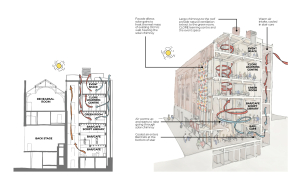
Backstage Building - Old Vic Annex
A new annex for Grade II*-listed theatre and the redevelopment of its back of house
A new-build six-storey extension and major reworking of the back of house to the world-famous Grade II*-listed theatre in London’s Waterloo. Highlights include an innovative natural ventilation system facilitated by thermal modelling. Rated BREEAM Excellent.
The Old Vic Theatre is located on Waterloo Road in London. New back-of-house facilities situated next to the theatre, now replace a former commercial restaurant. The project aimed to meet the client’s budget while delivering a bespoke, highly sustainable solution through excellent design and construction standards. The new annex features a triple-height street café, script library, writers' room, learning centre, green room, and rooftop event space.
The site remains comfortable in summer due to passive strategies such as thermal mass, secure nighttime cooling, shading, and natural ventilation.
Key project features include a natural ventilation system that mitigates noise and pollution from the busy road, using a fully sealed front façade. To compensate for the timber structure’s limited thermal mass, the system draws air from the top of the stairwell, cooling it via the staircase's thermal mass. In warm weather, the cooled air flows into lower areas and rises to exit through a solar chimney. The process is driven by heat from occupants and solar gain through the glazed front façade as well as carefully detailed roof cowls to maximise the cooling benefit of the prevailing wind. Stairwell glazing at each floor enhances daylight and visual connectivity.
A low-temperature hot water system, including domestic hot water, is powered by rooftop air-source heat pumps.
The project has also remodelled the existing back-of-house areas with a relocation of the stage door, improved dressing room and office facilities and a rooftop air handling unit (AHU) supplying fresh, tempered air to the rehearsal room, supplied via an air source heat pump.
The Old Vic Theatre sets a new standard for sustainable design in historic buildings by implementing innovative passive strategies along with energy-efficient systems, creating an enhanced environment for performers and visitors alike and securing its legacy for generations to come.
Visuals by Haworth Tompkins
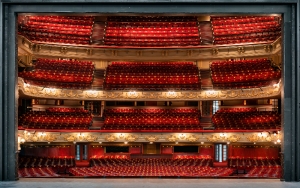
Theatre Royal Drury Lane
The Grade I-listed Theatre Royal Drury Lane, owned and managed by Andrew Lloyd Webber’s LW Theatres and built originally in 1812, is set to regain its status as the prime venue for musical theatre in London.
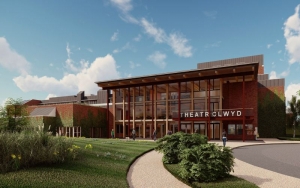
Theatr Clwyd
Phased redevelopment of the Grade II-listed theatre kept it open via a pop-up auditorium. New foyer and rooms were added. Fabric and services upgrades, with new low-carbon heating, delivered ambitious energy targets. Stage and fly system modernised. BREEAM Very Good. 2021 Stage Awards winner.
Theatr Clwyd, a Welsh cultural landmark, is being transformed from its ageing 1970s infrastructure into a state-of-the-art, environmentally responsible venue. Addressing long-term resilience, accessibility, and future sustainability, the project balances heritage conservation with a bold shift to fossil-fuel-free operation.
Upgrades include expanded public spaces with a striking timber-framed foyer, a double-height rehearsal room, a dedicated learning studio, and fully modernised performance facilities—enhancing usability, accessibility, and audience experience while showcasing Wales's creative talent. Ongoing community consultation enabled the theatre to evolve with and for its users.
Skelly & Couch led a full systems overhaul targeting an 85% cut in operational carbon emissions. With a BREEAM ‘Very Good' rating, the project aims to be among the UK's first zero on-site emissions cultural venues.
A fabric-first retrofit targetted airtightness of 5 m³/h/m² @ 50 Pa, delivering year-round comfort and reduced energy demand. High-performance insulation and triple-glazed windows stabilise indoor temperatures and eliminate drafts, while natural ventilation wherever possible ensures fresh air without reliance on mechanical systems. Green roofs and walls add insulation, enhance biodiversity, and foster a calming connection to nature.
The project adopts an all-electric, heat pump–based strategy to eliminate fossil fuels. Gas boilers are replaced with air-source heat pumps for low-carbon heating and hot water, cutting emissions by two-thirds. A 1,000 m² rooftop solar array generates clean energy on-site, while MVHR provides filtered fresh air where natural ventilation is insufficient, minimising energy loss. Rainwater harvesting supplies toilets, easing demand on local infrastructure and reinforcing responsible resource use.
Theatr Clwyd proves how sensitive adaptation and sustainable design can enrich one another, creating a flexible, future-ready venue that prioritises wellbeing, performance, and long-term resilience.
Testimonials
"Skelly & Couch are extremely experienced at working on complex buildings and their knowledge and great attention to detail have been very beneficial to this public-facing project.” Jack Tilbury, Client Project Manager, Plann Limited
Awards
2021 - Planning Awards finalist. Best Use of Arts, Culture or Sport in Placemaking
2021 - Stage Awards Winner, Regional Theatre of the Year
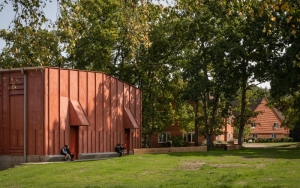
Horris Hill School David Brownlow Theatre
Skelly & Couch provided full environmental M&E on the David Brownlow Theatre in the grounds of Horris Hill prep school in rural Berkshire.
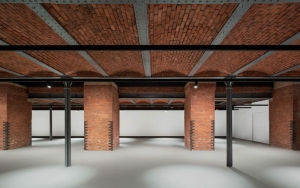
Science and Industry Museum SEG Manchester
The £5m Special Exhibitions Gallery combines grand industrial beauty and stunning sustainable design as part of a masterplan to restore and renovate a Grade I-listed railway station, warehouse and Grade II-listed railway viaduct.
Rhodes House, Oxford
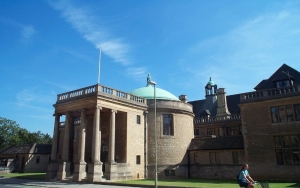
Skelly & Couch has completed Stage 4 design at the Grade II*-listed Rhodes House, Oxford, for a new world-class convening hub designed to encourage the global exchange of ideas across all cultures and nationalities.
King's School Canterbury Collection
A series of commissions for The King’s School Canterbury £48m plan.
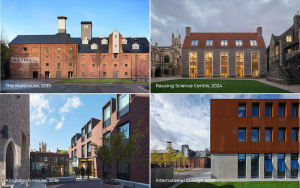
As part of The King’s School Canterbury £48 million development plan, five projects have been undertaken: the Malthouse Performing Arts Centre, Kingsdown House, Mitchinson’s Day House, an International College, and the Precincts project with the Rausing Science Centre and additional dining facilities—all in collaboration with Skelly & Couch.
The 19th-century Malthouse is a new performance centre for the school, comprising drama and dance teaching facilities, a 350-seat auditorium, theatre foyers, as well as science and art teaching accommodation. It also includes commercial kitchen and dining facilities.
Phase 1 of the Kingsdown House refurbishment created boarding accommodation for 30 pupils, including a common room, study area, and kitchen. For phase 2, a new building was constructed for the older pupils of the house. Kingsdown House won three 2019 Canterbury Society Design Awards and a 2018 Civic Trust AABC Conservation Commendation.
The masterful conversion of a Grade II-listed building provided the Mitchinson’s Day House for 70 non-boarding pupils, featuring study and social spaces, changing rooms, and a kitchenette; ensuring high levels of comfort while minimising operational energy consumption through passive design.
The International College is a purpose-built teaching and residential building designed for international students to live and learn in Canterbury. It offers 34 ensuite bedrooms for students, as well as flats for staff and specialist teaching facilities. Constructed in cross-laminated timber, the three-storey building wraps around a private courtyard for socialising and learning.
Resolving two main challenges on the school’s site, the Precincts Project has updated and co-located science facilities to bring them up to a world-class standard and increased dining and social provision to cater for a larger school population.
The Rausing Science Centre is the school’s first new construction since the 1970s. Situated within a World Heritage Site with a rich archaeological history and Grade I-listed buildings, the centre was meticulously designed to blend with its environment. It features six state-of-the-art physics labs, a versatile auditorium for up to 140 people, and dedicated spaces for staff and circulation. it connects with refurbished biology and chemistry facilities, fostering interdisciplinary collaboration.
Lastly, the ground floor of the Grade II listed Shirley hall has been reconfigured to create a second lunchtime venue, providing additional space for students to enjoy meals in a historic and scenic setting.
The developments at King’s School, Canterbury bring the UK’s most historic school to a world-class standard by meeting the educational needs of today while respecting the architectural legacy of the past.
Awards
Winner of a RIBA National Award 2021.
Winner of three RIBA South East Awards 2021: Main Award, Building of the Year and Conservation
Civic Trust Awards 2023.
Winner of an AJ Retrofit Award 2021: Cultural Buildings £5 million and over.
Winner of three Canterbury Society Design Awards 2019: Overall Winner; New Building in a Conservation Area; and best Refurbishment.
Commended at the Civic Trust AABC Conservation 2018.
Shortlisted for an AJ Retrofit Award 2019.
Winner of a RIBA National Award 2021.
Highly Commended at the in the Civic Trust Awards 2022.