

Camila Fontalvo
The New Temple Complex - Civic Trust Award Winner 2024
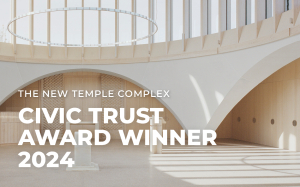
For the first time in the 65-year history of the Civic Trust Awards, a project has received two National Special Awards — The National Panel Special Award, which stands as the top award, chosen by National Panel members from among this year's winning projects, and the Special Award for Sustainability, granted to projects demonstrating exceptional sustainability credentials across various parameters including design, materials, construction methods, and long-term energy consumption.
The project celebrated during the 2024 ceremony is The New Temple Complex by James Gorst Architects, with Skelly & Couch credited for developing the building’s environmental strategy. In presenting the award, John Davies, Head of Sustainability at Derwent London announced:
"The New Temple Complex has embraced a forward-thinking, net-zero carbon approach, focusing on a site-generated, all-electric strategy supported by natural ventilation and daylighting, integrated into a resource-efficient, engineered timber structure. This project stood out by demonstrating how a low-carbon yet impactful design can successfully marry sustainability and architecture. A highly worthy winner."
The Temple Complex sets a standard for sustainable architecture, showcasing how innovative design can not only minimise environmental impact but also create spaces that are functional, beautiful, and enduring. It has been an honour to contribute to this project and we extend our heartfelt congratulations to all involved.
Architect James Gorst Architects
Client The White Eagle Lodge
Structural engineer Eckersley O’Callaghan
M&E consultant Skelly & Couch
Main Contractor Beard Construction
Universal Design Consultant Peter Connel Associates
Landscape Architect Mc William Studio
Whitburn Coastal Conservation Centre
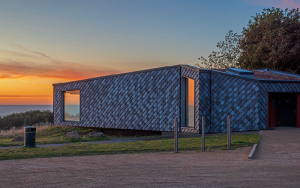
New Marine Conservation Hub for the North East coastline.
A sustainable, site-sensitive National Trust centre with multi-use spaces, bird ringing workshop and WCs. Built using low carbon and recycled materials to aspirational fabric standards and incorporating demand control ventilation, reversible heat pumps, PV's, a green roof and point-of-use hot water heating.
Perched on the scenic cliffs of Whitburn near Sunderland, beside the Grade II listed Souter Lighthouse (the world's first powered by electricity). The new Whitburn Coastal Conservation Centre is a striking addition to the coastline. Developed by the National Trust with the Seascapes marine landscape scheme, it serves as a hub for nature conservation, education, and community engagement. Its purpose-built facilities include an exhibition space, bird ringing and coastal activity workshops, multi-use education and event spaces, and WCs—all designed to connect people with the coast and promote its conservation.
Piloting the National Trust's sustainability matrix and earning an EPC A-rating of 12. It won the 2025 RIBA North East Award for its sensitive, sustainable design. Eco-friendly materials such as cross-laminated timber and recycled plastic tiles contribute to a low-impact construction. Skelly & Couch delivered the full M&E services, addressing both sustainability and the challenges of the exposed coastal setting and intermittent use.Piloting the National Trust's sustainability matrix and earning an EPC A-rating of 12. It won the 2025 RIBA North East Award for its sensitive, sustainable design. Eco-friendly materials such as cross-laminated timber and recycled plastic tiles contribute to a low-impact construction. Skelly & Couch delivered the full M&E services, addressing both sustainability and the challenges of the exposed coastal setting and intermittent use.
A high-performance fabric and airtight design actively regulate indoor temperatures, delivering consistent comfort for visitors all year round. A high-performance fabric and airtight design actively regulate indoor temperatures, delivering consistent comfort for visitors all year round. Sunlight pours through large solar-controlled glazing, reducing the need for electric lighting and offering panoramic coastal views. In addition, a green roof supports wildlife, provides passive cooling, and blends the building into its surroundings.
Reversible air-source heat pumps and a zoned MVHR system maintain a stable internal atmosphere and deliver fresh, filtered air only when needed. Photovoltaic panels, LED lighting, and point-of-use water heating further minimise energy use, while smart metering ensures optimal long-term performance.Reversible air-source heat pumps and a zoned MVHR system maintain a stable internal atmosphere and deliver fresh, filtered air only when needed. Photovoltaic panels, LED lighting, and point-of-use water heating further minimise energy use, while smart metering ensures optimal long-term performance.
As a sustainable model for the future, the centre demonstrates how considerate design can engage communities, protect landscapes and set new standards for environmental responsibility.
Awards
2024 - CENE Awards
2024 - ICE North East Awards Highly Commended
2025 - RIBA North East Award Winner
Matfen Hall, Northumberland
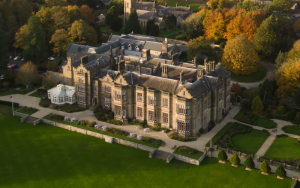
Luxury hotel, spa and golf club with a bold and sustainable vision.
Bespoke refurbishment of the Grade II* Listed Matfen Hall Hotel to become a five-star destination including kitchen relocation, fire and life safety upgrades, plant room modifications, and most notably enclosing the open courtyards into an event space at the heart of the hotel. Highlights include the well-coordinated, hidden services throughout.
Following new ownership in 2020, Matfen Hall underwent a major refurbishment. The initial masterplan covered the hotel, golf course, and spa ensuring power, heat, and water supply, along with the integration of suitable technologies.
The project’s timeline was accelerated due to the COVID-19 closure, requiring efficiency and coordination across overlapping planning and execution stages. The refurbishment then unfolded in four phases to keep the hotel operational. This included upgrading the fire safety systems, the complex relocation of a commercial kitchen to the basement, appropriate control of the heating system, full refurbishment of bedrooms and bathrooms and the enclosure of the upper and lower courtyards.
The newly developed courtyard features a bar, dining space, and breakout areas, designed to maintain an outdoor feel with natural ventilation achieved through passive vents with temp and CO2 sensors. Careful specification of the glass roof and the thermal mass of the building prevent overheating. A nearby stone stairwell, with high-level openings, serves as a thermal store that pre-cools the air before it enters the courtyard, ensuring a comfortable environment during the summer months.
Enclosing the courtyard made the existing basement oil boilers unusable. They were replaced with heat exchangers connected to an energy center via district heating pipes routed under the building, which provide renewable heat sources.
Hidden services were seamlessly integrated throughout, including underfloor heating, embedded lighting, and concealed plumbing, accentuating the elegance of the spaces.
Matfen Hall’s refurbishment successfully integrates sustainable practices and cutting-edge technologies, revitalising its luxury offerings and enhancing operational efficiency while preserving its historic charm.
Playhouse Theatre, London - Kit Kat Club
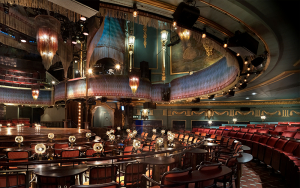
An Exceptional Theatre Transformation for Multi-award-winning Production.
London’s Grade II-listed Playhouse Theatre was reconfigured from a proscenium-arch auditorium into a spectacular in-the-round venue, with additional rooms in the upper circle level. Completed in record time for the multi-award-winning Cabaret, it recreated the Kit Kat Club's intimate atmosphere, transporting audiences to 1930s Berlin.
The project involved securing listed building consent, obtaining planning approval, and reconfiguring the entire auditorium—all within 9 months. Navigating the existing services and live safety systems within the limited timeframe was challenging. Engineering judgement was crucial for discerning and prioritising key requirements, addressing critical issues, and ensuring successful project completion while meeting regulatory compliance.
Listed original ductwork, a rare feature, required detailed surveying to effectively reuse it. All other services were adapted or renewed and located in the basement.
In a theatre-in-the-round, the audience surrounds the stage, creating an immersive and dynamic experience. This configuration demands inventive staging for clear views from all seats, impacting infrastructure and service distribution. New raked seating led to changes in the lighting and validation of the existing ventilation and smoke ventilation systems.
LED lighting replaced halogen bulbs throughout. Ventilation and cooling in the basement dressing rooms and bar were upgraded to a new MVHR system with occupancy controls, replacing a continuously operational system. These interventions significantly reduced energy consumption.
A new entrance corridor, designed to evoke a night club atmosphere, required attention to health and safety, including concealing valves and pipework.
The transformation and exceptional turnaround at the Playhouse Theatre, stands as a testament to the team's dedication and spirit. This effort culminated in the production of Cabaret, winning no fewer than seven Olivier Awards in 2022.
‘Eddie Redmayne may be the star — and he’s mesmerisingly good too — but he really shares top billing with the venue itself.’
Clive Davis, The Times
Nominated for Theatre Building of the Year in The Stage Awards 2023.
2023 Civic Trust Award Winner (Pro-Tem Award).* Civic Trust Pro-Tem Awards recognise temporary structures and installations that make an outstanding contribution to the quality and appearance of the built environment.
2023 RIBA London Architecture Award Winner. The RIBA judges commented: "The Kit Kat Club is a great example of how critical, light-touch interventions can transform an existing building. The key aspect of sustainability was in relation to the consideration given to the demountability of the new interventions. In addition, materials were salvaged and reused where possible, including the timber for the main set from original flooring, as well as some of the loose furniture." See the full citation: https://www.ribaj.com/buildings/regional-awards-2023-london-north-carmody-groarke-kit-kat-club-playhouse-theatre-culture-entertainment
2023 RIBA National Award Winner.
Backstage Building - Old Vic Annex
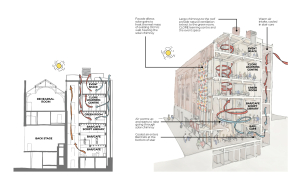
A new annex for Grade II*-listed theatre and the redevelopment of its back of house
A new-build six-storey extension and major reworking of the back of house to the world-famous Grade II*-listed theatre in London’s Waterloo. Highlights include an innovative natural ventilation system facilitated by thermal modelling. Rated BREEAM Excellent.
The Old Vic Theatre is located on Waterloo Road in London. New back-of-house facilities situated next to the theatre, now replace a former commercial restaurant. The project aimed to meet the client’s budget while delivering a bespoke, highly sustainable solution through excellent design and construction standards. The new annex features a triple-height street café, script library, writers' room, learning centre, green room, and rooftop event space.
The site remains comfortable in summer due to passive strategies such as thermal mass, secure nighttime cooling, shading, and natural ventilation.
Key project features include a natural ventilation system that mitigates noise and pollution from the busy road, using a fully sealed front façade. To compensate for the timber structure’s limited thermal mass, the system draws air from the top of the stairwell, cooling it via the staircase's thermal mass. In warm weather, the cooled air flows into lower areas and rises to exit through a solar chimney. The process is driven by heat from occupants and solar gain through the glazed front façade as well as carefully detailed roof cowls to maximise the cooling benefit of the prevailing wind. Stairwell glazing at each floor enhances daylight and visual connectivity.
A low-temperature hot water system, including domestic hot water, is powered by rooftop air-source heat pumps.
The project has also remodelled the existing back-of-house areas with a relocation of the stage door, improved dressing room and office facilities and a rooftop air handling unit (AHU) supplying fresh, tempered air to the rehearsal room, supplied via an air source heat pump.
The Old Vic Theatre sets a new standard for sustainable design in historic buildings by implementing innovative passive strategies along with energy-efficient systems, creating an enhanced environment for performers and visitors alike and securing its legacy for generations to come.
Visuals by Haworth Tompkins
Theatr Clwyd
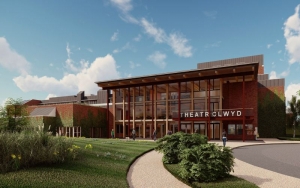
Phased redevelopment of the Grade II-listed theatre kept it open via a pop-up auditorium. New foyer and rooms were added. Fabric and services upgrades, with new low-carbon heating, delivered ambitious energy targets. Stage and fly system modernised. BREEAM Very Good. 2021 Stage Awards winner.
Theatr Clwyd, a Welsh cultural landmark, is being transformed from its ageing 1970s infrastructure into a state-of-the-art, environmentally responsible venue. Addressing long-term resilience, accessibility, and future sustainability, the project balances heritage conservation with a bold shift to fossil-fuel-free operation.
Upgrades include expanded public spaces with a striking timber-framed foyer, a double-height rehearsal room, a dedicated learning studio, and fully modernised performance facilities—enhancing usability, accessibility, and audience experience while showcasing Wales's creative talent. Ongoing community consultation enabled the theatre to evolve with and for its users.
Skelly & Couch led a full systems overhaul targeting an 85% cut in operational carbon emissions. With a BREEAM ‘Very Good' rating, the project aims to be among the UK's first zero on-site emissions cultural venues.
A fabric-first retrofit targetted airtightness of 5 m³/h/m² @ 50 Pa, delivering year-round comfort and reduced energy demand. High-performance insulation and triple-glazed windows stabilise indoor temperatures and eliminate drafts, while natural ventilation wherever possible ensures fresh air without reliance on mechanical systems. Green roofs and walls add insulation, enhance biodiversity, and foster a calming connection to nature.
The project adopts an all-electric, heat pump–based strategy to eliminate fossil fuels. Gas boilers are replaced with air-source heat pumps for low-carbon heating and hot water, cutting emissions by two-thirds. A 1,000 m² rooftop solar array generates clean energy on-site, while MVHR provides filtered fresh air where natural ventilation is insufficient, minimising energy loss. Rainwater harvesting supplies toilets, easing demand on local infrastructure and reinforcing responsible resource use.
Theatr Clwyd proves how sensitive adaptation and sustainable design can enrich one another, creating a flexible, future-ready venue that prioritises wellbeing, performance, and long-term resilience.
Testimonials
"Skelly & Couch are extremely experienced at working on complex buildings and their knowledge and great attention to detail have been very beneficial to this public-facing project.” Jack Tilbury, Client Project Manager, Plann Limited
Awards
2021 - Planning Awards finalist. Best Use of Arts, Culture or Sport in Placemaking
2021 - Stage Awards Winner, Regional Theatre of the Year
Brighton College, Performing Arts Centre (PAC)
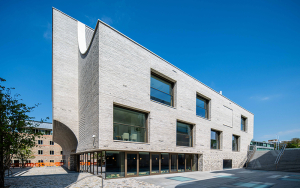
A new, mixed-used performance arts centre for Brighton College.
A new performing arts hub, constructed in a tight, listed site, features a 400 seat multi-functional theatre at its core, studio spaces and high-quality circulation areas and classrooms. It has achieved BREEAM Excellent and ‘A’ EPC rating.
Continuing our longstanding collaboration and pioneering work at Brighton College, the Performing Arts Centre (PAC) marks Skelly & Couch’s third major project at the institution, following the Music School (2015) and Sports and Science Centre (2020).
PAC is part of the college's masterplan. Rising from the green campus landscape like a white chalk cliff, it is constructed in a tight, listed site surrounded by the school’s Sir Gilbert Scott-designed main building and the Sports and Science Centre.
The building is predominantly naturally lit with highly glazed foyer, classroom, and work areas, alongside studios with high-level windows, which can be blinded for specific performance needs. In the main theatre, a large oculus provides the stage and seating area with daylight.
The building primarily relies on natural ventilation, using its layout design, atrium space, and high-level openings to encourage airflow. Extensive thermal modelling ensured effective air movement and control of summertime temperatures. In the theatre, air circulation is achieved through under-seat mechanical air supply with extract at high level.
PAC uses low-carbon, renewable heating and cooling via water source heat pumps, partially powered by a large photovoltaic array at roof level. It is the fourth building to connect to this network, which also serves three earlier buildings on this side of the campus.
As part of an early energy strategy for the evolving campus, an open-loop borehole network was established to support the heat pump system. Skelly & Couch evaluated system options and provided a detailed analysis of carbon savings and payback periods as the network expanded to include additional buildings.
While early irrigation borehole tests confirmed groundwater presence, further investigations were necessary to verify the site’s capacity for sustainable heating and cooling. Four buildings are now connected, delivering substantial CO₂ savings and demonstrating the tangible environmental value of this approach.
The Performance Arts Centre exemplifies Brighton College's commitment to excellence. It provides a cutting-edge hub that integrates sustainable practices, not only fostering artistic expression but also enriching the wider community for generations to come.
Photographs courtesy of Gilbert Ash - Site Contractor.
Press Coverage
King's School Canterbury Collection
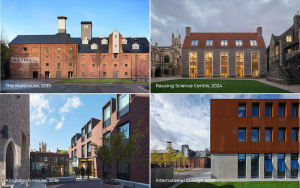
A series of commissions for The King’s School Canterbury £48m plan.
As part of The King’s School Canterbury £48 million development plan, five projects have been undertaken: the Malthouse Performing Arts Centre, Kingsdown House, Mitchinson’s Day House, an International College, and the Precincts project with the Rausing Science Centre and additional dining facilities—all in collaboration with Skelly & Couch.
The 19th-century Malthouse is a new performance centre for the school, comprising drama and dance teaching facilities, a 350-seat auditorium, theatre foyers, as well as science and art teaching accommodation. It also includes commercial kitchen and dining facilities.
Phase 1 of the Kingsdown House refurbishment created boarding accommodation for 30 pupils, including a common room, study area, and kitchen. For phase 2, a new building was constructed for the older pupils of the house. Kingsdown House won three 2019 Canterbury Society Design Awards and a 2018 Civic Trust AABC Conservation Commendation.
The masterful conversion of a Grade II-listed building provided the Mitchinson’s Day House for 70 non-boarding pupils, featuring study and social spaces, changing rooms, and a kitchenette; ensuring high levels of comfort while minimising operational energy consumption through passive design.
The International College is a purpose-built teaching and residential building designed for international students to live and learn in Canterbury. It offers 34 ensuite bedrooms for students, as well as flats for staff and specialist teaching facilities. Constructed in cross-laminated timber, the three-storey building wraps around a private courtyard for socialising and learning.
Resolving two main challenges on the school’s site, the Precincts Project has updated and co-located science facilities to bring them up to a world-class standard and increased dining and social provision to cater for a larger school population.
The Rausing Science Centre is the school’s first new construction since the 1970s. Situated within a World Heritage Site with a rich archaeological history and Grade I-listed buildings, the centre was meticulously designed to blend with its environment. It features six state-of-the-art physics labs, a versatile auditorium for up to 140 people, and dedicated spaces for staff and circulation. it connects with refurbished biology and chemistry facilities, fostering interdisciplinary collaboration.
Lastly, the ground floor of the Grade II listed Shirley hall has been reconfigured to create a second lunchtime venue, providing additional space for students to enjoy meals in a historic and scenic setting.
The developments at King’s School, Canterbury bring the UK’s most historic school to a world-class standard by meeting the educational needs of today while respecting the architectural legacy of the past.
Awards
Winner of a RIBA National Award 2021.
Winner of three RIBA South East Awards 2021: Main Award, Building of the Year and Conservation
Civic Trust Awards 2023.
Winner of an AJ Retrofit Award 2021: Cultural Buildings £5 million and over.
Winner of three Canterbury Society Design Awards 2019: Overall Winner; New Building in a Conservation Area; and best Refurbishment.
Commended at the Civic Trust AABC Conservation 2018.
Shortlisted for an AJ Retrofit Award 2019.
Winner of a RIBA National Award 2021.
Highly Commended at the in the Civic Trust Awards 2022.
New Temple Complex
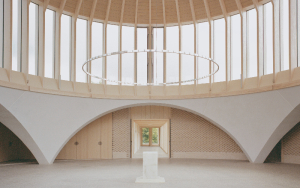
The 559m² New Temple Complex by James Gorst Architects demonstrates an exemplar approach to passive design and long-term sustainability.
Situated within an 11.5-hectare estate in the South Downs National Park, the New Temple Complex is a multi-faith space comprising of healing chapels, a library, a multi-use lecture room, a kitchen and a visitor’s entrance foyer; all linked via an internal cloister. The temple holds symbolic elements reflecting the spiritual beliefs of the White Eagle Lodge and it occupies the same sacred spot as its 1970s predecessor. The building is completely framed in timber with clay brickwork encased in chalk lime mortar, all natural materials found in the immediate surroundings, encouraging a connection with the landscape.
The building’s environmental strategy is rooted in passive design principles, prioritising energy efficiency during the initial design phase. This approach includes low fabric heat loss, enhanced daylighting, and natural ventilation, forming the basis for the subsequent integration of low-carbon and renewable technologies.
The building fabric incorporates high-performance glazing exceeding conventional insulation standards, thereby effectively minimising heat loss. The New Temple's shallow, single-storey structure maximises daylight, reducing the need for artificial lighting. Nestled away from noise and pollution, the temple enjoys the benefits of natural ventilation, further aided by high-level actuators strategically placed in the temple's clerestory.
Innovative sustainability features include a sub-floor ventilation system operational in high occupancy areas. This system uses the thermal mass of a labyrinth to provide tempered air in winter and free cooling in summer.
Overcoming challenges posed by the absence of natural gas infrastructure and the availability of only single-phase power, the project successfully procured a small low-carbon ground source heat pump meeting the needs of the entire building. Buried in the landscape, this technology extracts low-temperature energy from the ground, producing higher temperatures that serve underfloor heating throughout the temple. Pre-existing photovoltaic panels were repurposed and relocated to an open area on-site, partially powering the heat pump and providing the building with low-carbon electricity.
The New Temple Complex stands as a timeless space for contemplation and community, seamlessly blending spirituality, simple architecture, and sustainable design. Its harmonious integration with the surroundings embodies both peace and environmental stewardship.
In Numbers
On-site energy generation 4,550 kWh/yr
Heating and hot water load 19.73 kWh/m2/yr
Total energy load 42.60 kWh/m2/yr
Carbon emissions (all) 25.9 kgCO2/m2
Services
Electrical and Lighting
Heating
Ventilation
Acoustics
Awards
2024 RIBA National Award Winner
2024 RIBA South Award Winner
2024 RIBA South Awards – Building of the Year Winner
2024 RIBA South Awards – Sustainability Award Winner
2024 RIBA South Awards – Project Architect of the Year Winner
2024 Civic Trust Awards – The National Panel Special Award Winner
2024 Civic Trust Awards – The Special Award for Sustainability
2023 AJ Architecture Awards Winner
2023 Wood Awards Winner
Download press coverage from right-hand column.
British Academy
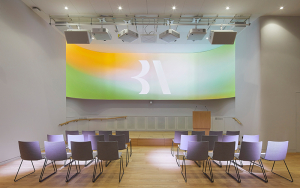
New spaces for the exchange of ideas and hybrid working at the Grade I-listed institution
Restoration of underused double-height basements created a new auditorium and three flexible event spaces with cutting-edge digital technologies for 220 people. Upgrades included remodeled WCs and improved ground-floor access. Energy efficiency was enhanced through new double glazing, low-carbon heating, and thermal zoning.
The British Academy is the UK’s national body for the humanities and social sciences – with a voice that champions the study of peoples, cultures and societies, past, present and future. Situated within the Grade I-listed Nash-designed Carlton House Terrace, the building lies between The Mall and Pall Mall in London’s Mayfair.
Skelly & Couch led the survey of existing services to plan diversions and demolitions of works alongside an extensive review of archive record drawings to understand the existing systems in place. New double glazing was installed, improving energy efficiency with a 40% reduction in heat loss. Natural ventilation was maximised by using direct connections to the outside for air paths.
Bespoke mechanical and electrical systems were designed to suit the building’s historical constraints. A reversible air source heat pump replaced gas boiler heating, providing low-carbon heating to the events spaces. This is facilitated by thermal zoning, a component of the new building energy management system which includes full fault diagnostics and energy sub-metering.
Heat reclaim mechanical ventilation enhances this setup by supplying filtered air while retaining most of the energy already used to heat the building. The auditorium ventilation system's design was carefully designed to align with the building’s architectural and structural needs without compromising its listed status. Additional energy-saving technologies include LED lighting with occupancy, daylight, and dimming controls, as well as low-flow water fittings to reduce hot water consumption.
The refurbishment of the lower floors of the British Academy marks a significant step in the Academy's mission to enhance both physical and intellectual access to the building, facilitating new conversations, new connections, and new ways of thinking within its historic walls.