
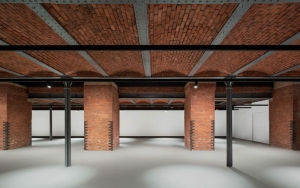
Science and Industry Museum SEG Manchester
The £5m Special Exhibitions Gallery combines grand industrial beauty and stunning sustainable design as part of a masterplan to restore and renovate a Grade I-listed railway station, warehouse and Grade II-listed railway viaduct.
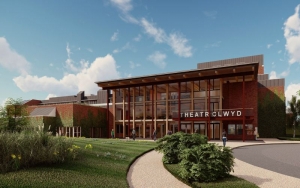
Theatr Clwyd
Phased redevelopment of the Grade II-listed theatre kept it open via a pop-up auditorium. New foyer and rooms were added. Fabric and services upgrades, with new low-carbon heating, delivered ambitious energy targets. Stage and fly system modernised. BREEAM Very Good. 2021 Stage Awards winner.
Theatr Clwyd, a Welsh cultural landmark, is being transformed from its ageing 1970s infrastructure into a state-of-the-art, environmentally responsible venue. Addressing long-term resilience, accessibility, and future sustainability, the project balances heritage conservation with a bold shift to fossil-fuel-free operation.
Upgrades include expanded public spaces with a striking timber-framed foyer, a double-height rehearsal room, a dedicated learning studio, and fully modernised performance facilities—enhancing usability, accessibility, and audience experience while showcasing Wales's creative talent. Ongoing community consultation enabled the theatre to evolve with and for its users.
Skelly & Couch led a full systems overhaul targeting an 85% cut in operational carbon emissions. With a BREEAM ‘Very Good' rating, the project aims to be among the UK's first zero on-site emissions cultural venues.
A fabric-first retrofit targetted airtightness of 5 m³/h/m² @ 50 Pa, delivering year-round comfort and reduced energy demand. High-performance insulation and triple-glazed windows stabilise indoor temperatures and eliminate drafts, while natural ventilation wherever possible ensures fresh air without reliance on mechanical systems. Green roofs and walls add insulation, enhance biodiversity, and foster a calming connection to nature.
The project adopts an all-electric, heat pump–based strategy to eliminate fossil fuels. Gas boilers are replaced with air-source heat pumps for low-carbon heating and hot water, cutting emissions by two-thirds. A 1,000 m² rooftop solar array generates clean energy on-site, while MVHR provides filtered fresh air where natural ventilation is insufficient, minimising energy loss. Rainwater harvesting supplies toilets, easing demand on local infrastructure and reinforcing responsible resource use.
Theatr Clwyd proves how sensitive adaptation and sustainable design can enrich one another, creating a flexible, future-ready venue that prioritises wellbeing, performance, and long-term resilience.
Testimonials
"Skelly & Couch are extremely experienced at working on complex buildings and their knowledge and great attention to detail have been very beneficial to this public-facing project.” Jack Tilbury, Client Project Manager, Plann Limited
Awards
2021 - Planning Awards finalist. Best Use of Arts, Culture or Sport in Placemaking
2021 - Stage Awards Winner, Regional Theatre of the Year
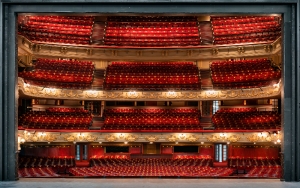
Theatre Royal Drury Lane
The Grade I-listed Theatre Royal Drury Lane, owned and managed by Andrew Lloyd Webber’s LW Theatres and built originally in 1812, is set to regain its status as the prime venue for musical theatre in London.
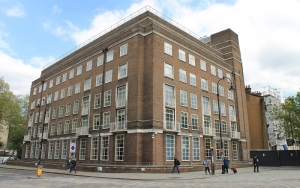
Warburg Institute
Refurbishment and extension of one of the world’s leading scholarly institutions.
Phased refurbishment of the world-leading center in a conservation area, focusing on preservation through environmental control. It includes the historic libraries, a new archive and gallery, an extension with a lecture theatre and reading room; and supports future district heating decarbonisation.
The Warburg Institute, at the University of London’s Bloomsbury campus, is a renowned humanities research institute and library. Housed in a 1950s four-story building with a lower ground floor, it holds a globally significant collection. Its open-stack library of over 360,000 volumes is the largest dedicated to the afterlife of antiquity and cultural transmission, with key materials secured in the archive.
Renovation began with library stacks and academic offices on the upper floors, followed by the first and second floors. The final phase transformed the ground and lower ground levels, adding a reception, gallery, special collections archive, photographic room, and a courtyard extension with a floating lecture theatre and archive reading room. Two AV-equipped classrooms replaced the former lecture theatre and connect to the new one, accommodating larger audiences. Plant facilities were upgraded throughout.
Passive strategies included double-height lightwells to bring daylight into the special collections reading room, reoriented library stacks to reduce sun exposure, and new secondary glazing to limit heat loss, improve thermal performance, and protect materials with integrated UV film.
Skelly & Couch worked with the existing district heating system to serve renovated areas and upgraded it to support future decarbonisation. Fragile ceilings required careful coordination with the structural engineer to ensure safe MEP installation. New heating with improved controls serves the building, while humidifiers in the libraries maintain moisture during heating periods. MVHR ventilates the gallery, lecture theatre, and reading room; toilets use extract-only systems. In the lecture theatre, an air source heat pump provides cooling during busy periods. Energy-efficient LED lighting with occupancy sensors and daylight dimming, along with low-flow water fittings, was installed throughout.
Archive materials were relocated to a windowless, insulated lower-ground room , designed to meet stringent storage standards. Thermally coupled to the ground, it is passively climate-controlled, with a dehumidifier to manage external moisture.
The renovation secures the Warburg Institute’s legacy of discovery and learning, creating welcoming, functional spaces for visitors and staff while safeguarding invaluable materials. The project achieved an SKA ‘Gold’ rating.
FT: Warburg Institute renovation to bring enigmatic establishment into 21st century
Awards
2025 - AJ Architecture Awards, Refurbishment (£10m and Over) and Higher Education categories, shortlisted.
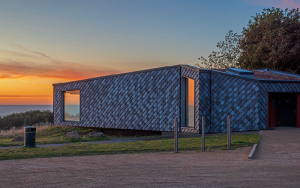
Whitburn Coastal Conservation Centre
New Marine Conservation Hub for the North East coastline.
A sustainable, site-sensitive National Trust centre with multi-use spaces, bird ringing workshop and WCs. Built using low carbon and recycled materials to aspirational fabric standards and incorporating demand control ventilation, reversible heat pumps, PV's, a green roof and point-of-use hot water heating.
Perched on the scenic cliffs of Whitburn near Sunderland, beside the Grade II listed Souter Lighthouse (the world's first powered by electricity). The new Whitburn Coastal Conservation Centre is a striking addition to the coastline. Developed by the National Trust with the Seascapes marine landscape scheme, it serves as a hub for nature conservation, education, and community engagement. Its purpose-built facilities include an exhibition space, bird ringing and coastal activity workshops, multi-use education and event spaces, and WCs—all designed to connect people with the coast and promote its conservation.
Piloting the National Trust's sustainability matrix and earning an EPC A-rating of 12. It won the 2025 RIBA North East Award for its sensitive, sustainable design. Eco-friendly materials such as cross-laminated timber and recycled plastic tiles contribute to a low-impact construction. Skelly & Couch delivered the full M&E services, addressing both sustainability and the challenges of the exposed coastal setting and intermittent use.Piloting the National Trust's sustainability matrix and earning an EPC A-rating of 12. It won the 2025 RIBA North East Award for its sensitive, sustainable design. Eco-friendly materials such as cross-laminated timber and recycled plastic tiles contribute to a low-impact construction. Skelly & Couch delivered the full M&E services, addressing both sustainability and the challenges of the exposed coastal setting and intermittent use.
A high-performance fabric and airtight design actively regulate indoor temperatures, delivering consistent comfort for visitors all year round. A high-performance fabric and airtight design actively regulate indoor temperatures, delivering consistent comfort for visitors all year round. Sunlight pours through large solar-controlled glazing, reducing the need for electric lighting and offering panoramic coastal views. In addition, a green roof supports wildlife, provides passive cooling, and blends the building into its surroundings.
Reversible air-source heat pumps and a zoned MVHR system maintain a stable internal atmosphere and deliver fresh, filtered air only when needed. Photovoltaic panels, LED lighting, and point-of-use water heating further minimise energy use, while smart metering ensures optimal long-term performance.Reversible air-source heat pumps and a zoned MVHR system maintain a stable internal atmosphere and deliver fresh, filtered air only when needed. Photovoltaic panels, LED lighting, and point-of-use water heating further minimise energy use, while smart metering ensures optimal long-term performance.
As a sustainable model for the future, the centre demonstrates how considerate design can engage communities, protect landscapes and set new standards for environmental responsibility.
Awards
2024 - CENE Awards
2024 - ICE North East Awards Highly Commended
2025 - RIBA North East Award Winner