

Catherine Hinshelwood
Well Walk Theatre
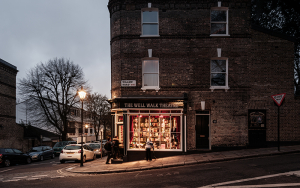
A one-of-a-kind, ambitious venue in the heart of Hampstead.
Client-led transformation of an existing pottery into an integrated café, bookshop and puppet theatre. The design maximises the space through an efficient layout of services and achieves high levels of occupant comfort all while respecting the French style of the interiors.
Nestled in the corner of a busy residential street in Hampstead conservation area, this “tiny space with big ambitions” was designed for mixed use across its two floors. The ground level houses café, bookshop, ticket office, toilets and kitchen, where crepes are freshly prepared. Below, the basement accommodates a technical studio for puppet making, a green room, props store and the main theatre. The owners, driven by their heritage, led the refurbishment, infusing the space with a distinctive French charm.
Skelly and Couch undertook full M&E duties. The building’s limited size and location restricted external plant, requiring an extremely effective layout of the services. Located within a residential development and beneath a maisonette, consideration of acoustics was essential.
A careful design solution was required to ensure adequate extract from the small crepe kitchen to the rear of the cafe. In the main theatre, ventilation is supplied through the floor, maximising the space available. The system delivers air at slow speeds and operates with heat recovery, increasing comfort while reducing running costs and carbon emissions.
Effective access control coupled with great care over fire safety safeguarded occupant welfare while balancing both secure back-of-house areas and public spaces. A deep understanding of how the building would operate was crucial—for example, restricting access to the main theatre outside showtimes while keeping the bookshop, café, and customer toilets open to the public. To ensure safety without compromising aesthetics, fire panels and emergency lights were discreetly integrated, and lantern-inspired light fittings were sourced.
Showcasing its French roots, this unique theatre integrates efficient plant design with strategies that support its diverse compact spaces while strengthening community ties.
Awards
2025 - Theatre Building of The Year, Stage Awards
National Theatre reroofing and rewiring
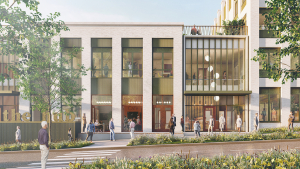
New, future-proofed roofs and electrical systems
Full rewiring of cabling as components reached the end of their life, including updates to PAVA, fire alarm, lift power and access systems.
The project is split into two parts; rewiring electrical systems no longer serving the theatre, ensuring compliance with government regulations, and reroofing the Lyttleton and Olivier theatres, improving their resilience against harsh weather, involving the fitting of new rainwater drainage systems and insulation.
At 2450 seats the theatre is a hot spot for tourists unfamiliar with their environment, therefore new, compliant PAVA and CCTV systems have been mapped alongside replacement lifts to increase the resilience and capacity for safe evacuation and the security of the building. Other works include removing redundant electrical systems, enlarging cable distribution routes sized for a degree of future proofing and enhancing the maintainability cabling, equipment and distribution boards.
New lighting design will be sympathetic to the architecture and will reuse existing positions to minimise impact on the infrastructure. More efficient fixtures, and new controls will support the theatre’s goal of reducing energy consumption.
By calculating maximum rainfall and assessing different downpipe and gutter capacities, Skelly and Couch ensured the proposed roof designs would endure a 1 in 100-year storm event, safeguarding this Grade II* listed building. Additionally, upgrades to the thermal performance of the Olivier and Lyttleton roofs were investigated using modelling software and results informed decisions on potential structure build ups aimed at optimising carbon payback, limiting heat losses and maintaining the building height to preserve the Southbank’s landmark skyline.
Careful phasing has allowed the theatre to remain open to the public with fully operational systems.
These improvements check off milestones to the Theatre’s goal of reaching net zero carbon.
Skelly & Couch on Twickenham Riverside team
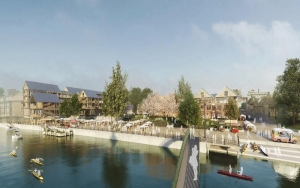
Leading building environment and services engineers Skelly & Couch are part of the preferred multidisciplinary team led by Hopkins Architects which has beaten four other contenders to develop Twickenham Riverside.
Marlborough College Science Centre
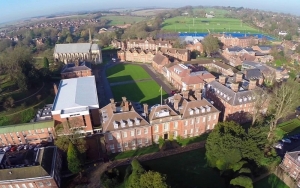
Refurbishment and update of Grade II-listed Science Buidling for historic boarding school.
Polka Theatre
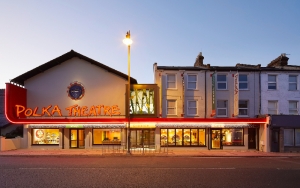
The original 40-year-old Polka Theatre in Wimbledon was the first UK theatre venue dedicated exclusively to children. This project features a refurbishment of the theatre with an added extension to the rear of the building led by Foster Wilson Size Architects.
Mountbatten House
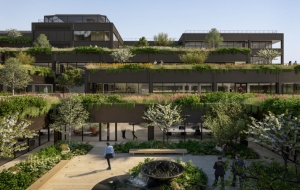
Heritage-led refurbishment and replacement of services in this iconic Grade II-listed office block.
Tring Park School for the Performing Arts
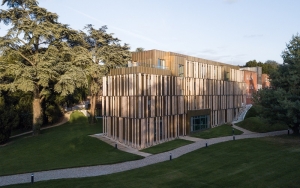
This project provides a new boarding house and hub building for Tring Park School for the Performing Arts, in Hertfordshire. The construction of a new boarding house will increase on-site accommodation, and the new hub building will provide a new reception, administration area, teaching and sixth form facilities for the school.
Windsor Walk
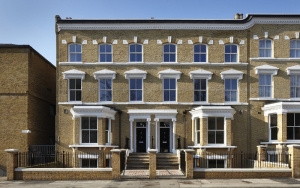
This project was the extensive refurbishment and reinstatement of six derelict Victorian terraced town houses in Denmark Hill, London. Four of the houses (numbers 6-9) were combined and converted into a 24-bedroom temporary accommodation unit, while the other two houses were redeveloped and sold as luxury 4-bedroom houses (numbers 10 and 11).
Jacksons Lane Arts Centre
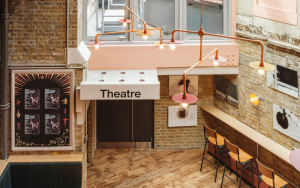
Founded in 1975 inside a former Wesleyan Methodist church, Grade II-listed Jacksons Lane Arts Centre has played a key role in the development of London’s fringe and community theatre. The latest project upgrades technical and visitor facilities within the complex, which features a 166-capacity theatre, large-scale studio and café-bar, all of which were in need of repair.
New College Court, Emmanuel College
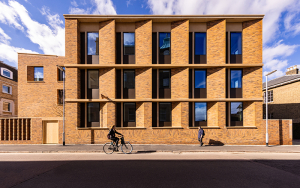
A phased transformation of the Emmanuel College Site around three new landscaped courts.
New residential student blocks with 59 ensuite rooms, gyms, fellow flats, and a 50-space subterranean car park, plus the transformation of a Grade II listed building to provide seminar, teaching, office, bar and event spaces along with the rebuilding of the South Court Social Hub.
The project was Emmanuel College’s most significant development for over 100 years and was located in the heart of the Cambridge Historic Core Conservation Area, in close proximity to the College’s historic Grade I and Grade II listed buildings. The aim was to redevelop a neglected part of the College site to create new facilities that enabled the College to meet its ambition to accommodate all undergraduate students on-site and for its community to mix, work and gather in new ways. Skelly & Couch were appointed as both M&E engineers and sustainability consultants and undertook full design duties using BIM.
From inception, Skelly & Couch worked closely with the architects to ensure the building massing and orientation was optimised to make best use of daylight and sunlight in all internal and external spaces. The advantages and disadvantages of concrete and CLT frames were considered and GGBS concrete frame with timber internal partitions and highly insulated timber facades was chosen for its improved performance in terms of summertime overheating and acoustics.
The system design included a number of energy and water saving measures such as mechanical ventilation and heat reclaim, rainwater recycling, Combined heat and power hot water heating, efficient LED lighting and controls. The strategy also included the implementation of an open loop ground source heat pump system that takes water from the underlying Lower Greensand Formation and provides heating and cooling to all of the buildings in the South of the College. It also includes an extensive 60kWp PV array on the South Court Building.
All of these measures represented an 80% operational carbon controls, low flow water fittings and a large Photovoltaic Array on the roof that powers the communal spaces.
Driven by a vision to cultivate an interconnected community, Emmanuel College adds a contemporary layer to its historic setting while enhancing social and intellectual life and prioritising sustainability for future relevance.
Press Coverage